
"coffee beans per tree"
5000 article(s) found

Katim Coffee Bean Flavor description Grinding scale Variety production area treatment method Taste introduction
Katim coffee bean flavor description grinding scale variety production area treatment method taste introduction 1. Baoshan State-owned Lujiang Farm planted 12.6 mu in March 1991, the land was unshaded and irrigated once in the dry season. The level of management and fertilization was above and above. The results in 1993 showed that the average yield per mu was 75 kg in 1993, 350 kg per mu in 1994 and 1995, 225 mu in 1995 and 1996.

Costa Rican Tarazhu Coffee Flavor description Grinding characteristics Price of High-quality Coffee beans in producing areas
Coffee was introduced into Costa Rica from Cuba in 1729. Today, its coffee industry is one of the well-organized industries in the world, with a yield of 1700 kg per hectare. Costa Rica has only 3.5 million people but 400m coffee trees, and coffee exports account for 25 per cent of the country's total exports. The volcanic soil of Costa Rica is very fertile and well drained, especially in the central part.

Colombia Na Linglong production area Colombia Na Linglong flavor Colombia Na Linglong how to drink?
Professional coffee knowledge exchange More coffee bean information Please pay attention to coffee workshop (Weixin Official Accounts cafe_style) Colombia Narino Province is located in the southwest of the country, facing the Pacific Ocean in the west and Ecuador in the south. The Andes Mountains traverse the province. Coffee is planted in the high altitude cloud belt of 16002300. The soil is fertile volcanic geology and the bean shape is small.

An introduction to the flavor of coffee beans in the region where the flavor of the sun is described.
Yega Xuefei Coffee introduces that Yega Xuefei's coffee trees were planted by European monks (a bit like Belgian monks growing wheat to brew beer), and later transferred to farmers or cooperatives. Yega Xuefei is actually constructed by surrounding coffee communities or cooperatives, including Edido Idido, Hafusha Harfusa, Hama Hama, Biloya near Fog Valley Misty valley.

Costa Rican coffee processing methods Brewing process Plantation estate Introduction
Coffee was introduced to Costa Rica from Cuba in 1729, and today its coffee industry is one of the most well-organized in the world, producing up to 1700 kilograms per hectare. Costa Rica has a population of 3.5 million, but coffee trees number 400 million, and coffee exports account for 25% of the country's total exports. The volcanic soils of Costa Rica are very fertile and well drained, especially in the central part.

Introduction to the requirements of planting environment and natural weather and climate of coffee trees in Colombia
Different kinds of coffee mature at different times. And fortunately, unlike Brazil, Colombia doesn't have to worry about frost. Approximately 2.7 billion coffee trees have been documented in Colombia, 66 per cent of which are planted in modern plantations and the rest on small traditionally run farms. The pure taste of Colombian coffee comes from Columbia, which has a coffee maker.
Light and pure sweet Costa Rican Tara beads boutique coffee beans origin development history and culture brief introduction
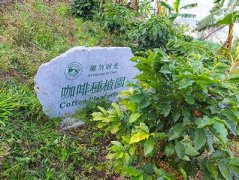
Coffee was introduced to Costa Rica from Cuba in 1729, and today its coffee industry is one of the most well-organized in the world, producing up to 1700 kilograms per hectare. Costa Rica has a population of 3.5 million, but coffee trees number 400 million, and coffee exports account for 25% of the country's total exports. The volcanic soils of Costa Rica are very fertile and well drained, especially in the central part.
World Map of Coffee beans-introduction of 53 Coffee producing areas in the World
one. Costa Rican coffee has full grains, ideal acidity and unique strong aroma. Tarrazu of Costa Rica is one of the major coffee producing areas in the world. Costa Rica, with its fertile volcanic soil and good drainage, is the first country in Central America to grow coffee and bananas for commercial value. Coffee and

How much is the domestic Jamaican coffee bean per jin?
Follow the caf é (Wechat official account vdailycom) found that the beautiful cafe opened its own small shop. How much is the Jamaican coffee beans per jin in China? if it is No. 1 beans (first-class), the price per cup will not be less than 300 yuan, while some domestic coffee shops sell for about 200 cups of authentic Blue Mountain. Although it is also made in Jamaica, it is only beans No. 3 (third-class products) at most.

Introduction to Costa Rican Yersalo Coffee Flavor Manor with light and pure flavor
Coffee was introduced into Costa Rica from Cuba in 1729. Today, its coffee industry is one of the well-organized industries in the world, with a yield of 1700 kg per hectare. Costa Rica has only 3.5 million people but 400m coffee trees, and coffee exports account for 25 per cent of the country's total exports. The volcanic soil of Costa Rica is very fertile and well drained, especially in the central part.

Abnormal climate in Costa Rica affects coffee production
According to the latest report released by the Costa Rican Coffee Authority, coffee production in the country has plummeted by nearly 30 per cent in the past decade, including a 15 per cent drop in 2011 compared with the same period last year. The report also pointed out that although the increase in production costs, price fluctuations in the international market and domestic policy changes have led to a decline in coffee production year by year, the main reason is the intensification of climate change. Costa Rica is the main coffee in the world

Introduction to the flavor and taste characteristics of Costa Rican coffee boutique coffee bean manor
Excellent Costa Rican coffee is called extra hard beans, and this kind of coffee can grow at an altitude of more than 1500 meters. Altitude has always been a problem for coffee growers. The higher the altitude, the better the coffee beans, not only because the higher altitude can increase the acidity of the coffee beans and thus increase the flavor, but also because the night temperature at the higher altitude is lower, which can make the trees grow slowly.

Katim Fine Coffee Bean Varieties Planting Location Climate Elevation Profile
1. The state-owned Lujiang Farm in Baoshan City was planted in March 1991 with an area of 12.6 mu. There was no shade and irrigation once in dry season. The management level and fertilizer application level were medium. The fruit was produced in 1993. The average yield per mu in 93/94 was 75 kg. The average yield per mu in 94/95 was 350 kg. The average yield per mu in 95/96 was 225 kg. The average yield per mu in three years was 217 kg. The yield was 36% higher than that of Tibika and Bobang (Tibika and Bobang

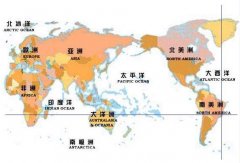
World Map of Coffee beans-take you to know 53 coffee producing areas around the world
There are shadows of coffee beans in many parts of the world, and they can grow normally as long as the climate is right. These places suitable for the cultivation of coffee beans, usually located between the Tropic of Cancer and the Tropic of Cancer, are called coffee growth zones. R: Robusta coffee beans M: mixed coffee beans A: Arabica coffee beans one. Costa Rican coffee has full grains, ideal acidity and aroma.

Introduction to the planting characteristics, flavor and taste of Salvadoran coffee beans
El Salvador coffee beans are characterized by planting characteristics, flavor and taste. In the 19th century, coffee in El Salvador was an important cash crop, and the government legislated to collect taxes and encourage planting and export. although coffee farmers in the country cannot get technical or financial assistance, they are excellent among many coffee-producing countries in terms of the growth of production per hectare. The output value of coffee is like fire

Introduction to the Grinding scale of Coffee Bean varieties produced in St. Roman Manor, Costa Rica
Tarrazu in Costa Rica is one of the major coffee producing areas in the world. The coffee produced is light and pure in flavor and pleasant in aroma. Costa Rica, with its fertile volcanic soil and good drainage, is the first country in Central America to grow coffee and bananas for commercial value. Coffee and bananas are the country's main exports. In 1729, coffee was introduced from Cuba to Goth.
Have a comprehensive understanding of coffee
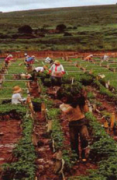
Legend of Coffee the person who first discovered coffee: a shepherd in Ethiopia, in the fifth and sixth centuries AD. It is said that Niankadi, a shepherd with talent as a poet, herded sheep on the mountain paths of the Ethiopian plateau every day. He liked to drive the sheep home with a shrill flute, but one day the flute sounded again and there was no sign of the sheep. He looked everywhere. Find sheep

There are 25 coffee producers around the world. Let's learn about it together.
Following caf é (Wechat official account vdailycom) found that Beautiful Cafe opened a small shop of its own in the world of bulk trade, in addition to our common soybeans, steel, crude oil, non-ferrous metals and other varieties, there are also many infrequently heard of but also very large trade varieties, such as cocoa, coffee and so on. The word coffee comes from the Greek word Kaweh, which means strength and enthusiasm.

Taste of Hawaiian Kona Coffee with suitable Climate introduction Fine Coffee beans Hawaiian Coffee beans
Kona coffee, Arabica, beautiful appearance, average neat bean shape, clear taste, medium mellow, slightly sour taste, strong aroma and long aftertaste. Kona coffee is divided into four grades, namely Extra Fancy, Fancy, Prime and Gr.No.1. Due to the low output and high production cost, the price of Kona in the market is catching up with the increasing demand for fine coffee.

Introduction of Coffee Flavor description and Grinding degree characteristics of Coffee in Saint Roman Manor, Costa Rica with good sweetness
Coffee was introduced into Costa Rica from Cuba in 1729. Today, its coffee industry is one of the well-organized industries in the world, with a yield of 1700 kg per hectare. Costa Rica has only 3.5 million people but 400m coffee trees, and coffee exports account for 25 per cent of the country's total exports. The volcanic soil of Costa Rica is very fertile and well drained, especially in the central part.